PRACTICAL GUIDE
Your daily foot health check
Look at each area, notice changes, and build care around your daily check.
Read the guide →PRACTICAL FOOT HEALTH
The useful test is not whether a sock says “diabetic.” It is whether the whole combination protects your foot without rubbing, squeezing or trapping dampness. Reduced sensation makes a visual check essential.
Have your feet measured and try shoes on with the socks and any prescribed inserts you actually use. Tell the fitter about diabetes, reduced feeling, previous ulcers or foot-shape changes. If you have been prescribed therapeutic footwear, follow the fitting team’s instructions rather than substituting a retail shoe.
Inspect the toe seam, sole and heel before wearing it. Choose a fit that stays smooth without bunching and a cuff that does not constrict. Look for holes, rough repairs or bulky seams. Consider a light color so blood or drainage is easier to spot. Moisture-wicking materials can help; no single fabric label proves the sock will work for your feet.
Look and feel inside for a small stone, rough lining, folded insole or an object pushed into the toe box. Shake out loose debris. Check that the sock lies flat before fastening the shoe. Socks alone are not protective indoor footwear: use properly fitting shoes indoors too.
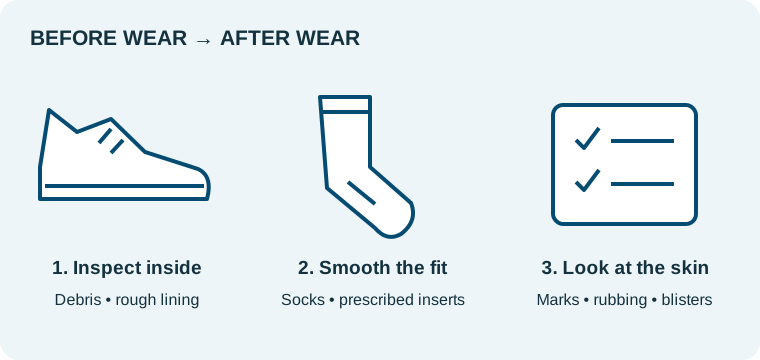
Kent Community Health recommends checking for rubbing after half an hour of initial wear at home. Follow a different schedule if your own footwear team provides one. Remove the shoes and socks and inspect the skin, especially the toe tips, sides, heel and ball of the foot.
Socks do not treat an ulcer or correct a pressure problem by themselves. A clinician may recommend specific shoes, inserts or pressure relief. Compression stockings are a separate decision: ask whether they suit your circulation and medical history rather than choosing compression based on a “diabetic” label.
Bring the shoes and socks you wear for the longest part of the day. Ask: “Where are my pressure points? Do I need a professional footwear assessment? What should I do if I see a mark after wearing this pair?”
Sources checked October 19, 2026. General education; follow your own care plan.
Published by AG Thermal. Read our editorial standards.