
Feeling fine? Still take a look.
Diabetes can affect feeling in your feet, so an injury may not hurt. Daily inspection helps you notice changes sooner. Comfortable feet and intact skin are encouraging, but appearance alone cannot confirm healthy nerves or circulation. Keep your professional foot exams: the CDC recommends a complete exam at least annually, with more frequent care when needed.
Guidance: CDC: Your Feet and Diabetes
Your daily check, step by step
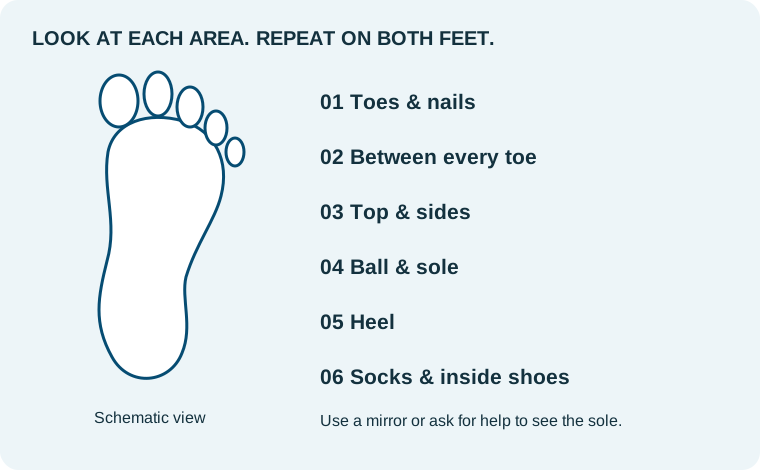
Choose a well-lit spot and sit somewhere stable. Take off your shoes and socks. Work through one foot, then the other, so each area gets attention.
- Look over the top, sole, heel, sides, and between every toe. Use a mirror or ask someone to help with areas you cannot see.
- Look for cuts, blisters, cracks, sores, swelling, or a new change in skin color. Notice nail changes, corns, and calluses too.
- Notice any new burning, tingling, numbness, pain, or change in temperature. Report changes even when the skin looks unbroken.
- Before putting shoes back on, check inside for small objects and rough lining. Make sure your shoes fit comfortably.
Guidance: CDC: Your Feet and Diabetes
A new change? Get help promptly.
Seek urgent medical advice for a new wound or a foot that becomes red or changes color, hot, or swollen; even if it does not hurt. Contact your diabetes team, podiatrist, or usual clinician immediately; if they are unavailable, use urgent care. Do not wait for your next routine appointment. Follow the emergency plan your own care team has given you.
- When you call, explain that you have diabetes, what has changed, which foot is affected, and when you first noticed it.
- Ask where you should be assessed and how quickly. A daily checklist cannot decide whether a change is safe to watch at home.
Read the full warning-signs guide →
Guidance: Leeds Community Healthcare NHS: Your feet and diabetes
Build care around the check
Gentle daily care belongs alongside inspection. Follow any individual instructions from your care team.
- Wash with warm, not hot, water and dry carefully, including between your toes. Avoid soaking your feet.
- Use a thin layer of moisturizer on dry skin on the tops and bottoms of your feet, keeping it out of the spaces between toes.
- Wear shoes and socks to protect your feet, including indoors. Avoid direct heat from heating pads or hot-water bottles.
- Do not cut corns or calluses or use chemical removers yourself. Ask a foot-care professional about them.
Guidance: NIDDK: Diabetes & Foot Problems
If seeing or reaching your feet is difficult
A mirror or help from another person can make checking the soles easier. If poor vision, stiffness, or balance makes the check difficult, ask your care team to demonstrate an approach you can manage safely. Do not force a painful position.
- For a caregiver: agree on a comfortable time and ask permission before helping. Describe what you notice in everyday words, such as “a new patch on the heel,” rather than guessing a diagnosis.
- Keep your clinician’s phone number with your routine supplies. A reminder beside your socks can help turn checking into a habit.
Guidance: NIDDK: Diabetes & Foot Problems
Everyday questions
Do I need to check when nothing hurts? Yes: reduced sensation can hide problems. Checking is about noticing, not testing your pain threshold.
- Should I trim my own toenails? Trim straight across when you can do so safely. Ask your care team or podiatrist for help if nail care is difficult.
- What if my feet are numb or a cut is not healing? Contact your doctor right away. Do not rely on the next daily check to settle the question.
- Can this routine replace my appointments? No. Use it alongside your diabetes care and the advice given for your individual foot risk.